For many Indian and South Asian families, caring for aging parents is tied to love, gratitude, family identity, faith, and the idea of seva. Adult children may feel that a good son or daughter should keep Mom or Dad at home and personally manage their needs. That belief comes from a meaningful place, but it can also create guilt when a parent’s needs become greater than one household can safely provide.
The better question is whether the care arrangement gives your parent safety, dignity, companionship, cultural comfort, and dependable help. For families in Old Bridge, East Brunswick, Monroe, Marlboro, Matawan, Sayreville, Manalapan, and across Central New Jersey, this guide explains how home care compares with assisted living and how a culturally familiar option such as Vision Riverside’s South Asian senior care program can fit within a family’s commitment to caring for parents.
Can Assisted Living Be Part of Seva and Family Duty?
Yes. Assisted living can be part of caring for an aging parent when it provides support the family can no longer safely provide at home. Family duty does not have to mean doing every task personally. It can also mean choosing dependable care, staying involved, protecting dignity, and making sure a parent is safe, connected, and respected.
The family is not being replaced. Professional caregivers become part of the care team while adult children remain advocates, decision-makers, companions, and the people who know their parent’s history best.
Seva Does Not Mean One Caregiver Must Do Everything
In family life, seva may look like preparing meals, taking a parent to appointments, managing medications, helping with bathing, or simply spending time together. But loving service should not depend on one person becoming exhausted.
Many adult children are also managing work, children, marriages, commuting, and their own health. Siblings may live in different states or countries. When one person quietly becomes the full-time caregiver, bringing in professional help can be a responsible way to honor family duty, not avoid it.
What Does Aging in Place Really Require?
Aging in place means remaining in one’s own home as care needs change. It can work well when the home, caregiver schedule, finances, and support system can realistically meet the person’s current and future needs.
A safe home plan may require:
- Bathroom safety changes, better lighting, clear walking paths, and other fall-prevention improvements.
- A ramp, stair lift, first-floor bedroom, or other accessibility changes as mobility declines.
- Reliable transportation for appointments, shopping, religious gatherings, and social activities.
- Medication reminders or hands-on medication management.
- Regular meal preparation that meets dietary, cultural, and medical needs.
- Housekeeping, laundry, home maintenance, and paid caregiving when family cannot be present.
- Overnight supervision when there is fall risk, confusion, wandering, or unsafe judgment.
- A backup plan when the primary family caregiver is sick, traveling, working, or needs rest.
The plan becomes fragile when it depends on one relative always being available. Families should ask whether the arrangement would still work if that person were unavailable for a week.
When Is Home No Longer Safe or Sustainable?
Look for patterns rather than one isolated event. One missed medication may be an accident. Repeated missed doses, falls, poor meals, increasing confusion, and caregiver exhaustion point to a larger problem.
- Falls, near-falls, unexplained bruises, or fear of walking alone.
- Medication mistakes, including missed or double doses.
- Weight loss, dehydration, skipped meals, or unsafe cooking.
- Declining hygiene or avoiding bathing because it feels unsafe.
- Unpaid bills, clutter, neglected housekeeping, or overdue home repairs.
- Isolation after stopping driving or losing regular social contact.
- Memory changes such as getting lost, leaving appliances on, wandering, or nighttime confusion.
- Caregiver burnout, sleep loss, missed work, or growing family conflict.
If several signs are appearing, compare the home plan with personalized assisted living support. A conversation or tour does not commit your parent to moving. It gives the family better information before a crisis forces a rushed decision.
What Does Assisted Living Offer?
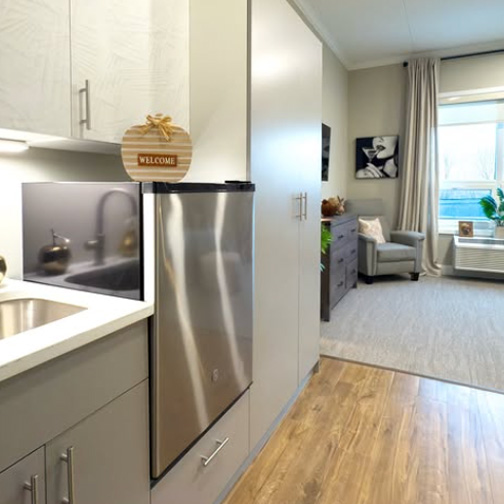
Assisted living is residential senior care for older adults who want to remain as independent as possible but need reliable help with parts of daily life. It is not a hospital and it is not the same as a nursing home. The resident’s apartment is their home, with assistance based on individual needs.
- Help with bathing, dressing, grooming, toileting, and mobility.
- Medication management, safety checks, and emergency response.
- Meals, housekeeping, laundry, and linen service.
- Activities, exercise, music, games, celebrations, and daily social contact.
- Care plans that can be adjusted as health and mobility needs change.
The social side can be just as important as the physical support. A parent may be technically safe at home but spend most of the day alone. Regular meals with other people, familiar music, conversation, and activities can give daily life more structure and connection.
What If My Parent Is Worried About Losing Indian or South Asian Culture?
This concern is common in immigrant families. A parent may speak English but still feel most comfortable expressing pain, preferences, humor, or memories in a familiar language. Food, holidays, prayer, music, and television can also shape whether a new place feels like home.
Vision Riverside’s Indian-focused senior living program in Old Bridge includes homestyle Indian cuisine, Indian television programming, cultural activities, and celebrations such as Diwali, Eid, Holi, Vaisakhi, Pongal, and Dashain. The program also highlights multilingual providers and caregivers who speak Hindi, Urdu, Gujarati, Punjabi, Nepali, and Telugu.
For families searching for Indian assisted living in New Jersey, South Asian assisted living near me, or culturally familiar senior care in Middlesex County, ask about these details directly. Cultural familiarity should be considered alongside staffing, safety, care levels, and cost.
When Does Memory Care Become the Safer Choice?
Assisted living may be appropriate when a parent needs help with daily tasks but can still make many decisions safely. Memory care is designed for people whose Alzheimer’s disease, dementia, or other cognitive changes affect judgment, orientation, behavior, wandering risk, or the ability to follow a safe routine.
Families can review Vision Riverside’s dedicated memory care program to understand how a secure environment, trained staff, structured routines, cognitive activities, and family communication differ from standard assisted living.
If your parent is getting lost, leaving home unexpectedly, becoming unsafe with medications, or experiencing significant nighttime confusion, ask the doctor whether the current home arrangement provides enough supervision.
Is Staying at Home Always Less Expensive?
Not necessarily. Families often compare the assisted living monthly fee with a mortgage-free home and assume staying home costs less. A fair comparison includes everything required to make home safe and staffed.
- Paid caregiver hours, including evenings, weekends, or overnight coverage.
- Home modifications and accessibility equipment.
- Meal preparation, housekeeping, laundry, transportation, and home maintenance.
- Medication support, emergency alert systems, and backup care.
- Income a family caregiver may lose by reducing work hours.
The right comparison is the actual cost of keeping this parent safe at home versus the actual cost of a community that can meet the same needs.
Vision Riverside’s New Jersey assisted living guide also explains common services, payment considerations, and how assisted living differs from nursing-home care.
What About Guilt, Siblings and “What Will People Say?”
In close-knit families, a private care decision can feel public. Relatives may have opinions, and siblings who live farther away may see the situation differently from the person providing daily care.
Bring the discussion back to facts. Who manages medications? How many hours is the parent alone? What happened after the last fall? Who is available at 2 a.m.? Is the caregiver sleeping and working normally? These questions are more useful than debating who loves the parent most.
Assisted living can also improve the family relationship. When staff handle routine care, adult children can spend more time being sons and daughters rather than full-time care managers.
Questions to Ask Your Family and Your Parent’s Doctor
Ask the doctor:
- Which daily activities does my parent need help with now?
- Is it medically safe for my parent to be alone for several hours or overnight?
- Do medications require supervision?
- Could recent confusion be caused by a treatable problem, or is dementia suspected?
- Would assisted living be enough, or is memory care more appropriate?
Ask the family:
- Is the current plan sustainable for the next six to twelve months?
- What happens if the main caregiver becomes unavailable?
- Is our parent safe overnight and eating consistently?
- Is our parent lonely even if basic needs are being met?
- Are we choosing the current arrangement because it works, or because we are afraid of discussing change?
How Do You Talk to a Parent Who Refuses Assisted Living?
Resistance often comes from fear of losing control. A parent may picture an institution or assume every decision will be made for them. Start by correcting that picture and focusing on what matters to them.
- Start with their goals. Talk about independence, avoiding falls, eating familiar food, seeing people, or staying close to family.
- Use specific examples. Say, “You missed your evening medication three times this week,” rather than, “You cannot live alone.”
- Offer choices. Include your parent in tours, apartment selection, meals, activities, and timing.
- Listen for the real concern. It may be money, privacy, food, language, religion, leaving the family home, or fear that children will stop visiting.
- Consider a trial stay. A short-term stay can feel less permanent and gives everyone real experience to evaluate.
Can a Trial Stay Make the Decision Easier?
Yes. A trial stay replaces assumptions with experience. Families can see whether meals, medications, sleep, safety, social engagement, mood, and caregiver stress improve after the adjustment period.
Vision Riverside offers 30-day furnished respite and trial stays with assisted living or memory care support based on the guest’s needs. Meals, housekeeping, laundry, activities, and community amenities are included, allowing a parent to experience the routine without beginning with a long-term commitment.
For a resistant parent, this can be a respectful middle step: “Let’s experience it and decide with better information,” rather than, “We have already decided your future.”
How Should an Indian or South Asian Family Evaluate Assisted Living?
Look beyond the lobby. Watch how residents are treated at meals, how staff respond when someone needs help, and whether the community can clearly explain how care changes as needs increase.
- How are care needs assessed and reassessed?
- Who is available during nights, weekends, and holidays?
- How are health changes and medication issues communicated to family?
- Can meals accommodate vegetarian, religious, regional, diabetic, or texture-modified needs?
- Which languages are spoken by staff and providers?
- How are Indian and South Asian holidays, music, television, prayer, and cultural activities supported?
- What happens if memory loss progresses?
- Which services are included in the monthly fee and which cost extra?
Vision Riverside also offers a detailed assisted living tour checklist families can use when comparing communities in Old Bridge and elsewhere in Central New Jersey.
A Different Way to Think About Family Duty
Love and location are not the same thing. Keeping a parent under your roof can be loving. Choosing assisted living can also be loving when it provides safer care, more companionship, better routines, and dependable help the family cannot provide alone.
Seva can mean cooking for your mother. It can also mean making sure she has a good meal when you are at work. It can mean helping your father bathe, and it can mean recognizing when transferring him safely requires trained assistance. Professional caregivers add support. They do not replace the family.
Frequently Asked Questions
Is putting a parent in assisted living against Indian family values?
No. Family values are expressed through care, respect, involvement, and responsibility. If assisted living gives your parent safer and more consistent support than the family can provide at home, choosing it can be an act of care.
What is the difference between assisted living and a nursing home?
Assisted living supports older adults who need help with daily activities, medications, meals, mobility, or safety while maintaining independence. A nursing home generally provides a higher level of ongoing skilled nursing and medical support.
How do I know when my parent should stop living alone?
Look for patterns such as falls, medication mistakes, weight loss, unsafe cooking, worsening hygiene, isolation, confusion, or wandering. Ask the doctor whether the current home plan is medically safe.
Can my parent still eat Indian food in assisted living?
It depends on the community, so ask before choosing. Vision Riverside’s Indian-focused program includes homestyle Indian cuisine and accommodates dietary preferences and restrictions.
What if my parent is more comfortable in an Indian language?
Language should be part of the care decision. Vision Riverside highlights providers and caregivers who speak Hindi, Urdu, Gujarati, Punjabi, Nepali, and Telugu.
Can we try assisted living before making a permanent decision?
Yes. Vision Riverside offers minimum 30-day furnished respite and trial stays with assisted living or memory care support, allowing the family to evaluate daily life before deciding what comes next.
What should I search for when looking for culturally familiar senior care in New Jersey?
Useful searches include Indian assisted living New Jersey, South Asian assisted living near me, assisted living Old Bridge NJ, and memory care Middlesex County. Then verify food, language, culture, staffing, safety, and care levels in person.
Talk With Vision Riverside About the Right Next Step
If your family is deciding between aging at home, assisted living, memory care, or a short-term trial stay, you do not have to wait for a crisis.
Vision Riverside Assisted Living and Memory Care is located at 105 Old Matawan Road, Old Bridge, NJ 08857. Families can contact the Vision Riverside team to discuss care needs, cultural and dietary preferences, or schedule a private tour.
Phone: (732) 440-7736
Website: https://visionriverside.com/
Email: info@visionriverside.com