When a parent begins needing more support, families often start with one question: Can Mom or Dad still live safely at home? That may soon lead to another: Is assisted living enough, or is specialized memory care the safer choice?
The answer depends on daily functioning, judgment, medication safety, mobility, behavior, social isolation, caregiver capacity, and how much structure your loved one needs. This guide explains the differences between assisted living and memory care, what aging in place realistically requires, how costs compare, and when a transition may be necessary.
Assisted Living vs. Memory Care: The Simple Difference
Assisted living supports older adults who need help with daily tasks but can still make many decisions and participate in a less restrictive setting. Memory care provides a more secure environment, dementia-trained staff, structured routines, and specialized programming for people whose memory loss affects safety, judgment, behavior, or daily functioning.
Both settings usually provide housing, meals, personal care, activities, and access to staff. The main difference is the level of supervision, structure, security, and cognitive support.
Is Aging in Place Still Safe?
Aging in place means remaining at home while growing older. It can work when the home is safe, the senior accepts help, reliable caregivers are available, and health needs remain manageable.
In practice, aging in place may require:
- Grab bars, better lighting, stair rails, ramps, or a first-floor bedroom
- Help with bathing, dressing, grooming, toileting, and mobility
- Medication organization or professional medication management
- Meal preparation and monitoring of nutrition and hydration
- Transportation, housekeeping, laundry, shopping, and maintenance
- Regular companionship and meaningful social activity
- Overnight supervision or an emergency response plan
- Added security for someone who wanders or leaves appliances on
The arrangement often becomes difficult when one relative carries most of the responsibility. Even paid home care can leave gaps between shifts or when a caregiver is unavailable.
Warning Signs That Home May No Longer Work
Look for patterns that are becoming more frequent or dangerous:
- Missed medications, double dosing, or prescription confusion
- Falls, unexplained bruises, or worsening mobility
- Weight loss, spoiled food, skipped meals, or dehydration
- Unpaid bills, unusual purchases, or vulnerability to scams
- Burned cookware, appliances left on, or water left running
- Poor hygiene, unchanged clothing, or an unclean home
- Getting lost, driving concerns, or confusion on familiar routes
- Withdrawal from friends, hobbies, or family
- Repeated calls for help, especially overnight
- Caregiver exhaustion, missed work, or family conflict
- Wandering, exit-seeking, agitation, or growing suspicion
If several signs are present, arrange a medical evaluation and a care assessment. Families in Old Bridge and Central New Jersey can also speak with Vision Riverside about assisted living, memory care, or a short trial stay.
What Does Assisted Living Offer?
Assisted living is for seniors who want to remain independent but need dependable help with parts of daily life. A resident may be mentally alert yet struggle with balance, arthritis, fatigue, medication routines, mobility, or personal care.
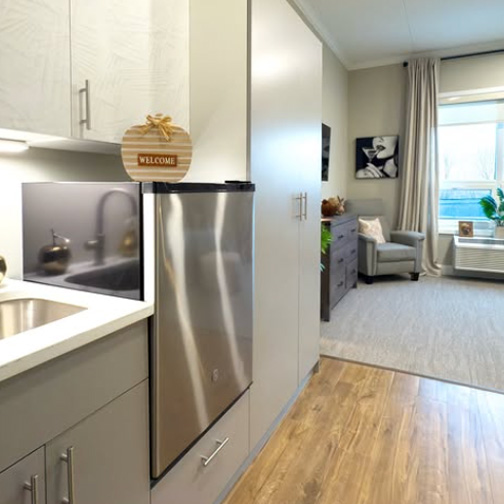
Vision Riverside’s assisted living services in Old Bridge include private studio apartments, emergency response features, personalized care plans, help with activities of daily living, medication management, housekeeping, laundry, meals, and social and wellness programming.
Assisted living may be a good fit when a loved one needs:
- Help with bathing, dressing, grooming, toileting, or walking
- Medication support
- Prepared meals and attention to dietary needs
- Regular safety checks and access to staff around the clock
- Housekeeping, laundry, and freedom from home maintenance
- A consistent routine and more social interaction
Good assisted living fills the gaps without taking over tasks a resident can still do.
Why Social Engagement Matters
Isolation can affect appetite, motivation, sleep, mobility, and mood. Activities in assisted living create routine, friendships, movement, and a reason to leave the apartment.
Vision Riverside offers fitness, arts and crafts, live entertainment, and social gatherings. Shared meals also help staff notice changes in appetite or participation. Families can review the community’s dining and nutrition program when comparing daily life and support.
What Does Memory Care Offer?
Memory care is designed for people with Alzheimer’s disease, dementia, or another condition affecting memory, reasoning, orientation, communication, or behavior. Residents may need the same personal support offered in assisted living, plus added security, specialized communication, and predictable routines.
Vision Riverside’s memory care program in Old Bridge provides a secure setting, around-the-clock support, individualized care plans, dementia-informed staff training, cognitive and sensory activities, and ongoing family communication.
Memory Care Is More Than Security
A strong memory care setting should reduce distress while helping residents move safely, make choices, and participate at their ability level. Common features include:
- Secured entrances and exits
- Wander-prevention systems
- Visual cues, clear signs, and easy-to-follow layouts
- Calm common spaces and quiet areas
- Consistent routines and familiar staff
- Dementia-specific communication and behavior support
- Activities adapted to attention span, ability, and life history
- More cueing and supervision during meals and personal care
Good memory care learns the resident’s routines, career, family story, culture, favorite music, and sources of comfort.
Assisted Living vs. Memory Care: Key Differences
Security
Assisted living provides emergency response systems, safety checks, accessible spaces, and staff availability. Residents generally have more freedom to come and go.
Memory care adds controlled access, wander-prevention measures, closer observation, and layouts that reduce disorientation. This becomes necessary when a person cannot reliably recognize danger or return to a safe area.
Programming
Assisted living activities may include fitness, games, outings, entertainment, crafts, and educational programs. Residents often choose among options and manage parts of their schedule.
Memory care programming is usually more structured. Reminiscence, music, sensory activities, simple household tasks, gentle movement, art, and nature can support comfort and connection without expecting residents to perform or remember instructions.
Supervision
An assisted living resident may need help at scheduled times and know how to ask for it.
A memory care resident may forget to use a call button, report pain, eat, use a walker, or find the bathroom. Staff must anticipate needs and watch for nonverbal signs.
Cost
Memory care usually costs more because it includes added security, specialized staffing, closer supervision, and dementia-focused programming.
Ask each community for a written explanation of:
- Monthly rent and level-of-care fees
- Medication management charges
- One-time community or move-in fees
- Incontinence, transfer, or escort assistance
- Transportation and other services
- How rates change when needs increase
- The financial process for moving from assisted living to memory care
Compare that with the full cost of staying home, including housing, utilities, food, repairs, transportation, modifications, housekeeping, emergency systems, and paid caregiving. Overnight or round-the-clock home care can change the comparison quickly.
Vision Riverside can complete a needs review and explain which services are included before a family decides.
How Do You Know Assisted Living Is the Right Fit?
Assisted living may be appropriate when your loved one:
- Recognizes familiar people and places
- Can usually communicate needs
- Understands basic safety instructions
- Does not have an ongoing wandering risk
- Can participate in a flexible daily schedule
- Needs more physical help than cognitive supervision
- Benefits from meals, medication support, activities, and staff access
Mild forgetfulness does not automatically require memory care. Some people with early cognitive changes do well in assisted living when they accept support and do not have serious safety or behavior concerns.
When Is It Time to Move From Assisted Living to Memory Care?
A transition may be needed when memory loss affects safety, care cooperation, or the resident’s ability to function in assisted living.
Watch for:
- Wandering or repeated attempts to leave
- Getting lost inside the building
- Forgetting how to use the emergency call system
- Falls caused by forgetting mobility instructions
- Refusing meals, medication, bathing, or toileting because of confusion
- Unsafe nighttime activity
- Agitation, fear, suspicion, or aggression needing specialized support
- Needing frequent cueing throughout most of the day
- A care plan that now requires near-constant supervision
Ask the community to document changes, review incidents, and explain what support can still be added. A physician should also check for treatable causes of sudden confusion, such as infection, medication effects, pain, dehydration, or another illness.
Families can tour Vision Riverside’s dedicated memory care setting and ask how a transition would be handled. When assisted living and memory care are offered in one community, familiar surroundings and staff may help ease the change.
Could a Respite or Trial Stay Help?
A respite or trial stay can help when home is no longer working but the family is not ready for a permanent move.
Vision Riverside offers 30-day respite and trial stays with furnished accommodations, meals, activities, housekeeping, and personalized assisted living or memory care support. A trial gives the care team time to observe routines and can give family caregivers a needed break.
Present the stay honestly as recovery, caregiver rest, or a chance to try a safer routine. Trust matters, especially when a parent fears decisions are being made without them.
Questions to Ask the Doctor and Your Family
Give the doctor specific examples, including falls, medication errors, weight changes, driving incidents, and nighttime behavior.
Ask the doctor:
- Could an infection, pain, depression, hearing loss, vision problem, or medication be causing the change?
- Is a cognitive evaluation appropriate?
- Can my loved one safely manage medications, meals, mobility, and emergencies?
- Is driving still safe?
- How much supervision is medically reasonable?
- Are the changes likely to progress?
Ask your family:
- Is the current care arrangement sustainable for six more months?
- What happens if the main caregiver becomes unavailable?
- Is our loved one safe in the evening and overnight?
- Has one relative become a full-time crisis manager?
- Which setting offers the best balance of independence, safety, companionship, and dignity?
How to Talk With a Parent Who Resists Moving
Resistance often comes from fear of losing control, identity, or familiar surroundings. Begin before a crisis and expect more than one conversation.
Use specific examples. Instead of saying, “You cannot live alone,” try: “You have fallen twice this month, and we are worried about what would happen if no one were here.”
Connect the move to goals your parent values, such as staying active, avoiding another hospital visit, eating better, seeing people more often, or no longer maintaining a house.
Offer meaningful choices. Let your parent help select communities, tour dates, apartment options, furniture, and activities. Avoid arguing about every mistaken memory. Keep the discussion centered on safety and support.
When searching for “assisted living near me” or “memory care in Old Bridge, NJ,” treat online results as a starting point. Visit in person and observe how staff speak to residents, how residents spend their day, and how care changes are managed.
How to Choose the Right Level of Care
Choose assisted living when the main needs are personal support, medication help, meals, housekeeping, safety checks, and social connection, while judgment and orientation remain mostly reliable.
Choose memory care when cognitive decline creates wandering risk, unsafe decisions, persistent confusion, inability to request help, major behavior changes, or a need for structured dementia-specific support.
The right choice should match current needs, not hopes or fears. Ask how often care plans are reviewed and what changes would trigger a move to a different level.
Frequently Asked Questions
Can someone with dementia live in assisted living?
Yes. Some people with mild dementia can live safely in assisted living if they follow basic directions, communicate needs, and are not at risk of wandering. An individual assessment should determine whether the setting can meet their needs.
Is memory care only for Alzheimer’s disease?
No. Memory care may support people with vascular dementia, Lewy body dementia, frontotemporal dementia, Parkinson’s-related dementia, and other cognitive conditions.
What is the biggest difference between assisted living and memory care?
The biggest difference is cognitive support and security. Memory care provides a secured environment, dementia-trained staff, closer supervision, structured routines, and adapted programming.
Does memory care cost more than assisted living?
Usually, yes. The higher cost reflects specialized staffing, added security, closer supervision, and dementia-focused programming. Request a complete estimate based on the resident’s needs.
How quickly can dementia care needs change?
Needs may change gradually or after an illness, hospitalization, fall, or medication change. Regular assessments help families respond before new risks become emergencies.
What should I look for during a memory care tour?
Observe how staff communicate, whether residents appear comfortable, how exits are secured, and whether the setting supports easy wayfinding. Ask about training, nighttime coverage, behavior support, meals, and family communication.
Can a trial stay help us decide?
Yes. A planned respite or trial stay can show how a loved one responds to regular meals, activities, staff support, and a safer routine while giving caregivers time to rest.
Talk With Vision Riverside About the Right Level of Care
Choosing care for a parent is personal, and families rarely arrive with every answer. A conversation and a tour can show what daily life looks like at each level of support.
Vision Riverside Assisted Living and Memory Care serves families in Old Bridge, Middlesex County, and throughout Central New Jersey. To discuss assisted living, specialized memory care, or a 30-day respite or trial stay, call (732) 440-7736, email info@visionriverside.com, or schedule a visit with Vision Riverside.
Vision Riverside is located at 105 Old Matawan Road, Old Bridge, NJ 08857.